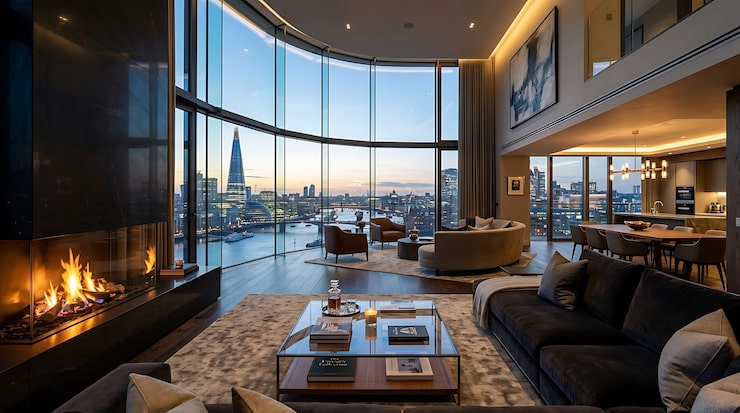
The word “luxury” is printed on almost every real estate brochure in the country. Marble in the lobby, a gym that nobody uses, a swimming pool in a corner. At some point, the word stopped meaning anything.
A smaller group of homes sits above that noise. They’re quieter, more considered and far less interested in shouting. If you’ve been exploring ultra luxury apartments in south delhi, it helps to know what actually earns that label and what’s just clever advertising. Let’s separate the two.
Premium and Ultra Luxury Aren’t the Same Thing
Premium homes are usually well-built, nicely finished and offer a good list of amenities. Ultra luxury goes further in ways that are harder to copy. It’s about scarcity, privacy, craftsmanship and service, not just a longer feature list.
A premium tower might have two hundred apartments sharing six lifts. An ultra luxury address may have only a handful of residences per floor, a private lift lobby and a lot of open space around the building. The difference shows up in how the home feels on an ordinary day, when you aren’t showing it to anyone.
That’s why price is only part of the picture. Plenty of expensive flats aren’t ultra luxury, and a few well-judged projects deliver the experience without making noise about it.
Low Density and Real Privacy
The first thing serious buyers look at, whatever the price band, is density. How many families share the land? How many apartments share a landing? How many cars use the gate at 9 am?
In South Delhi, land is limited and expensive, so projects that keep density low are making a deliberate choice that costs them money. That’s a big reason why genuine ultra luxury apartments in south delhi are so few in number. For the buyer, the payoff is calm. You’re not queuing for lifts, you’re not hearing the neighbour’s every move, and your balcony isn’t staring into someone else’s living room.
Privacy also includes how visitors are handled. Thoughtful projects separate guest entrances from service routes, control access carefully and design parking so you can reach your door without crossing a crowd. Little things, but they add up to the feeling of living somewhere protected.
Craftsmanship You Can See and Touch
Ultra luxury shows in materials. Natural stone that’s been matched slab by slab, solid wood doors that close with a quiet thud, high-grade fittings in the bathroom, and windows that cut street noise in a busy city. These are choices that take planning and budget.
Ceiling height matters more than most buyers realise. A few extra inches change how a room feels. So do wide corridors, generous bedrooms and kitchens designed for people who really cook. Look for details such as concealed lighting, carefully planned storage and finishes that continue consistently through the home rather than changing the moment you step into a back room.
Ask to see a finished sample apartment rather than a model room built for show, because the two are rarely the same. A simple test is to look at the unglamorous places. Check the corners of a wardrobe, the edge of a countertop and the inside of a cupboard. Where the finishing is neat in these places, it’s usually neat everywhere.
Services That Quietly Make Life Easier
People often assume amenities are what define luxury. In reality, services matter more. A clubhouse is nice, but the real difference is a concierge who knows your name, trained security staff, quick maintenance response and a facility team that handles small issues before you notice them.
Look for backup power that works silently, water treatment that suits Delhi’s hard water, good air quality systems, and well-planned parking with EV charging. Delhi’s pollution has pushed many buyers to ask about filtration and ventilation, and sensible projects now plan for it.
Ask how the building will be managed after the developer hands it over. A beautiful project can lose its shine in a few years if maintenance is poorly handled, so the management model deserves as much attention as the design.
Smart Features Without the Gimmicks
Technology can be a real benefit if it’s sensible. Smart locks, app-based access, automated lighting and climate control are now common in high-end homes. What matters is whether they’re reliable and whether the system can be repaired and updated years later.
Be wary of fancy features that depend on a single supplier or need specialist technicians. A simple, well-wired home that can accept new technology later is often a better bet than a heavily automated one that’s outdated in five years. Ask who supports the systems after handover and what happens if the vendor shuts down.
Energy efficiency is worth a look as well. Good insulation, efficient glazing and sensible lighting reduce running costs and make the home more comfortable through Delhi’s extreme summers and sharp winters.
Why South Delhi Specifically
South Delhi has attracted wealthy families for decades for sound reasons. It has green belts, established neighbourhoods, quick access to the airport and the central business district, and an enviable mix of schools, hospitals and cultural spaces.
Just as important, the supply is tightly controlled. Land parcels are small, approvals are demanding and new large projects are rare. That scarcity supports long-term value in a way that sprawling suburban development can’t match.
Prime addresses here also tend to come with a strong sense of community. Neighbours are often long-term residents, professionals, business families and people who value discretion. For many buyers, that social setting is as important as the architecture.
Who’s Buying and What They Want
The buyers in this segment are a mixed group. Some are business families upgrading from large independent houses and looking for a home that’s easier to maintain. Others are senior professionals who want a lock-and-leave home while they travel. NRIs often look for a safe, well-managed base in the city where they grew up.
What they ask for is fairly consistent: privacy, security, quality, location and a developer they trust. Few of them ask about the length of the amenity list. They ask who’s built it, who’ll manage it and what happens when something goes wrong.
That last point is worth thinking about even if you aren’t at this budget. Trust in the team behind the project matters at every price level, but it matters most when the ticket size is large.
Thinking About Value Over the Long Run
A home at this level is partly a place to live and partly a store of value. Properties in scarce, established locations have historically held up well during slower periods, though no one can promise future returns and prices can still move down.
What protects value is mostly boring: clean paperwork, a recognised developer, well-maintained common areas and a design that doesn’t date quickly. Fashionable features age badly. Good proportions, natural light and strong materials don’t, which is why they’re worth paying for.
If rental income interests you, remember that the pool of tenants for very high-end homes is smaller, and vacancy periods can be longer. It’s worth speaking with a few local advisers before assuming a yield.
Myths About High-End Apartments
A few myths float around. One says that a higher price automatically guarantees better quality. It doesn’t. Plenty of expensive projects have average workmanship, so you still have to inspect with your own eyes and, ideally, an independent expert.
Another says that apartments can never match the feel of a standalone house. A well-planned apartment with generous proportions, private lift access and a terrace can offer more comfort and security than an ageing independent house, with far less upkeep.
A third myth is that only big names deliver. Established companies bring experience, but smaller, focused teams that handle a limited number of projects can offer closer supervision. Judge by results, not by size or by the number of hoardings around the city.
Questions to Ask Before You Book
Start with the paperwork: ownership, approvals, RERA registration and the draft agreement. Then ask about the apartment itself, including carpet area, ceiling height, brands of fittings and what’s included in the price. Ask how many units the project has, how many share each floor and how the building will be managed over time.
Visit more than once, preferably at different times. Walk the common areas, check the parking, listen for noise and look at how staff behave. If you can speak with the developer’s team directly instead of only a salesperson, even better.
Final Thoughts
True luxury isn’t loud. It’s the absence of friction: space, silence, security and details that have been thought through by people who care. That’s worth keeping in mind as you compare projects.
If you’re comparing ultra luxury apartments in south delhi, look past the marketing language and judge each project by density, craftsmanship, services and the credibility of the team. A home that stands up to those questions is likely to serve you well for decades.