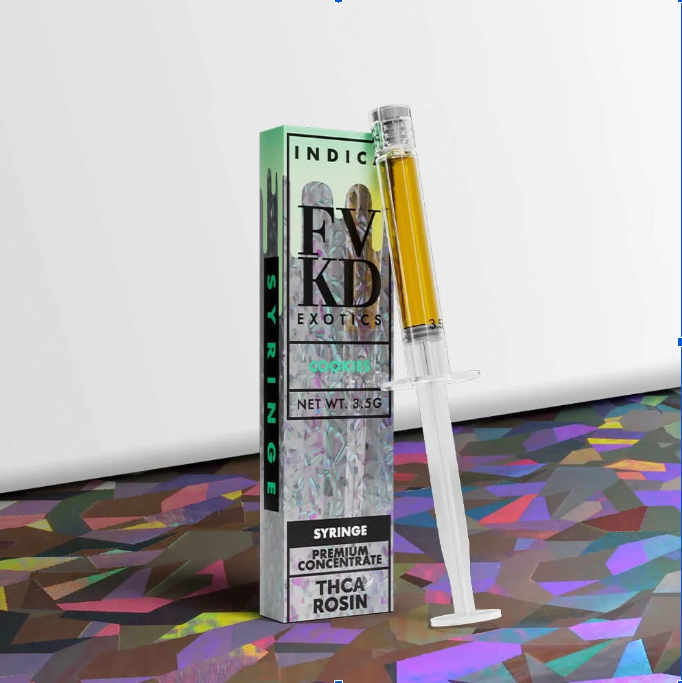
Cannabis concentrates are available in several forms, and their packaging can sometimes create confusion for first-time buyers. Syringe-style containers are one format used for storing and dispensing certain concentrated extracts. However, their appearance does not tell the complete story about the contents, consistency, or intended application. Before comparing these products, it helps to understand the purpose of concentrate syringes, the information provided on their labels, and the differences between various extract categories. Paying attention to these details makes product comparisons more informed and reduces the chances of relying on assumptions.
What Are Concentrate Syringes?
Concentrate syringes are containers designed to hold and dispense thick extracts. Unlike ordinary liquid containers, they generally have a plunger mechanism that helps move viscous material through a narrow outlet. Their construction allows manufacturers to package certain extracts in a controlled container without relying on traditional jars.
The material inside can vary depending on the formulation and manufacturing process. Some extracts have a thicker consistency, while others may be softer or more fluid. Temperature, composition, and processing methods can influence these physical characteristics.
A syringe-style package should not automatically be confused with a medical syringe. Products intended for non-medical purposes have different applications, and their packaging should clearly communicate the manufacturer’s intended use. Consumers should never assume that a concentrate is suitable for injection or medical administration.
How Do Different Concentrate Formats Compare?
Concentrates can be packaged in jars, cartridges, containers, or syringe-style dispensers. Each format serves a different packaging purpose.
Jars are commonly associated with thicker extracts that can be stored in small containers. Cartridges are designed for compatible vaporizer hardware, while syringe-style packaging is used for certain concentrated formulations.
The difference is not necessarily related to potency or quality. Two products packaged differently may contain similar extract categories, while products in identical packaging may have entirely different compositions.
When comparing options, check the following details:
- Packaging: Does the container clearly identify the product and its contents?
- Consistency: Is the physical appearance consistent with the manufacturer’s description?
- Ingredients: Are the listed components clearly identified?
- Testing: Is there an independent laboratory report?
- Storage: Does the packaging provide suitable storage information?
These details offer a more useful basis for comparison than packaging appearance alone.
What Should Buyers Know About Live Rosin Extracts?
Live rosin is a solventless concentrate produced through a process that typically involves separating resin from plant material using ice water, followed by heat and pressure. The process differs from extraction methods that rely on chemical solvents.
The phrase fvkd live rosin dab syringes refers to a specific branded product search. Anyone researching this category should check the actual product listing to confirm the extract type, ingredients, cannabinoid information, and packaging details. A product name alone cannot establish its composition or manufacturing process.
Live rosin is also different from live resin. Although the names sound similar, the extraction methods are not identical. Live resin generally involves solvent-based extraction, whereas live rosin uses a solventless approach. This distinction matters when comparing product descriptions and understanding what an extract label communicates.
Consumers should also avoid assuming that solventless automatically means contaminant-free. Independent testing remains important for checking the documented composition of a finished product.
Why Does Packaging Matter for Concentrated Extracts?
Packaging does more than provide a container. It helps protect the contents, communicate product information, and provide details about handling and storage.
Concentrated extracts can have different physical properties, so packaging needs to be appropriate for the material it contains. A container that is not properly sealed may expose its contents to air, moisture, or contamination.
For syringe-style products, the plunger, body, outlet, and closure are important packaging components. Consumers should look for visible damage, leakage, broken seals, or unclear labeling. Any product with compromised packaging should be treated cautiously.
The packaging should also identify the manufacturer or responsible seller, provide relevant batch information, and include applicable warnings. Clear documentation makes it easier to identify a product and verify whether its laboratory report corresponds to the correct batch.
What Information Should You Check Before Choosing FVKD Syringes?
When researching FVKD syringes, begin with the available product documentation rather than relying only on photographs or descriptions. Confirm the extract category, ingredient list, cannabinoid content, and any relevant handling warnings.
A certificate of analysis (COA) can provide additional information. This is a laboratory document that reports the results of testing a particular sample. Depending on the testing panel, it may include cannabinoid measurements and screening for contaminants such as pesticides, residual solvents, heavy metals, and microbial impurities.
Check whether the report identifies the laboratory, testing date, sample information, and batch number. The report should correspond to the product being considered. A generic laboratory document that cannot be connected to a specific batch offers limited reassurance.
Also, pay attention to whether product descriptions make claims that are supported by documentation. Marketing language should never replace measurable product information.
How Should Concentrate Products Be Stored and Handled?
Storage instructions depend on the extract formulation and the manufacturer’s packaging recommendations. Some concentrates may be sensitive to heat, light, or air exposure. Incorrect storage can affect their physical condition and potentially compromise packaging.
Always follow the manufacturer’s instructions for the specific product. Keep containers closed, avoid unnecessary handling, and store them away from direct sunlight and excessive heat. Products should also remain inaccessible to children and pets.
Do not modify packaging, transfer extracts into unlabelled containers, or use damaged dispensers. Syringe-style packaging should never be used for injection unless a product is specifically authorized and labeled for that medical purpose.
Disposal also deserves attention. Follow local waste requirements and manufacturer guidance rather than placing potentially contaminated materials or packaging wherever convenient.
What Should First-Time Buyers Consider About Concentrate Products?
People researching concentrated hemp-derived products should consider more than the packaging format. Ingredient transparency, laboratory testing, manufacturing information, and applicable regulations all contribute to a more informed purchasing decision.
It is also important to recognize that inhaling or otherwise using cannabinoid concentrates may carry health risks. Product testing does not establish that consumption is harmless. Individuals who do not use these products should not start, and anyone with health concerns should consult a qualified healthcare professional.
Age Disclaimer: This article is intended exclusively for adults aged 21 and older. Do not purchase, possess, or use age-restricted cannabinoid products if you are under 21 or if local law prohibits them. Regulations differ across US states and may change. Always check current federal, state, and local requirements.
Final Thoughts
Concentrate syringes are a packaging format, not a guarantee of extract quality, purity, or suitability. Buyers should pay attention to ingredient disclosures, batch-specific laboratory reports, packaging condition, and manufacturer instructions before evaluating any product. Differences between solventless and solvent-based extracts also deserve consideration when comparing product descriptions. FVKD Exotics is one brand consumers may research, but decisions should always rely on current, verifiable documentation rather than assumptions based on branding or presentation.